The most dangerous Q4 cost is the one hiding inside an order that looks profitable.
A sale can increase revenue while simultaneously increasing the labour, rework, inventory, exception handling and reverse-logistics effort required to fulfil it. At peak, those costs compound quickly. For CFOs, the challenge is not simply keeping orders moving. It is making sure the operation can absorb higher volume without creating a rising cost per order or an operational ceiling on growth. That is why ecommerce fulfillment costs deserve attention before peak season. They sit across departments and systems, making them easy to underestimate.
DHL’s 2026 research found that 67% of shoppers had abandoned a purchase because the delivery offering did not meet expectations, while 58% had done so because returns fell short. For a CFO, the question is not simply, “How much does fulfillment cost?” It is, “Where is the fulfillment of quietly removing margin from every additional order?”
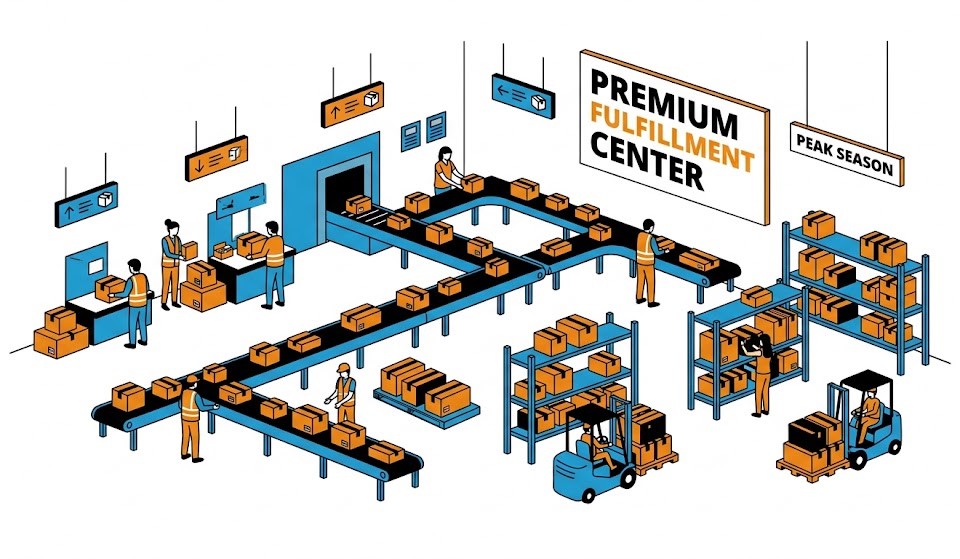
The Cost of Manual Processing
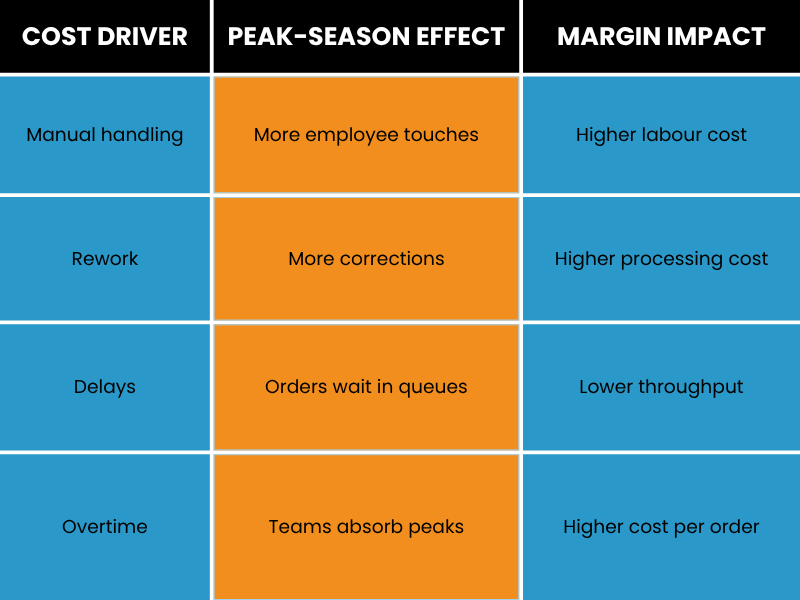
Manual order processing is rarely one large task. It is a collection of small interventions: checking addresses, validating payments, updating statuses, allocating stock, copying data between systems and following up on routine issues. In Q4, the cost of manual order processing becomes more visible as queues grow. At normal volume, these tasks can appear manageable. During Q4, they become capacity constraints.
The hidden issue is opportunity cost. Experienced employees spend time on repetitive work that software could perform consistently, while higher-value decisions continue waiting in the queue.
What CFOs Should Measure
The useful question is not how many employees are processing orders. It is how much intervention each order actually requires. Metrics such as manual touches per order, processing time, error rates, overtime and rework provide a clearer picture of ecommerce fulfillment costs. More importantly, they help CFOs identify where additional volume is creating disproportionate cost and where operational capacity needs to be protected before peak. This is one area where we.simplify’s approach to workflow automation can help: identify repetitive steps first, then automate the parts that do not require human judgement.
The objective is not to remove people from fulfillment. It is to reserve human intervention for decisions, exceptions and customer-impacting issues.
The Cost of Stock Discrepancies

Inventory accuracy is a financial control, not merely a warehouse metric. When system stock differs from physical availability, the consequences can include overselling, cancelled orders, emergency replenishment and unnecessary inventory holding. The inventory discrepancy cost can extend far beyond the item itself. A stock error may trigger refunds, expedited shipping, lost sales or distorted purchasing decisions. This becomes harder to control when inventory information sits across e-commerce platforms, ERP systems, warehouse systems and spreadsheets.
Measuring the Cost of Inaccuracy
The inventory discrepancy cost should be assessed through stock accuracy, adjustment frequency, oversells, cancellations and affected sales. These measures help finance and operations understand whether inaccurate inventory is creating avoidable cost, tying up working capital or influencing purchasing decisions with unreliable data. Integration and automated reconciliation can flag mismatches before they become customer-facing problems, making ecommerce fulfillment costs easier to identify and manage. For enterprises preparing for peak, this is also where connected workflows become valuable. Rather than treating inventory as a static data point, teams can create automated checks that identify inconsistencies and route them to the right owner.
The Cost of Unresolved Exceptions
A standard order usually follows a predictable path. Exceptions do not. Payment failures, address problems, damaged goods, missing inventory and failed fulfillment steps can all create work outside the normal flow. The financial problem begins when exceptions sit unresolved. Fulfilment exception management should focus on identifying cases quickly, assigning ownership and applying the appropriate resolution. Predictable exceptions can often be routed or resolved through rules without requiring someone to investigate them from scratch.
Measuring Exception Age, Not Just Exception Volume
Weak fulfilment exception management creates a backlog that consumes operational capacity. One delayed order can generate another customer contact, a refund request, an internal investigation and additional processing. A Q4 dashboard should therefore track exception rate alongside exception age, resolution time and cost per exception. A business with a slightly higher exception rate but rapid resolution may have lower operational costs than one with fewer exceptions that require lengthy manual investigation.
Workflow automation can prioritise cases, notify owners and trigger predefined actions. That matters directly to ecommerce fulfillment costs because unresolved work creates labour and service costs long after the original order.
The Cost of System Handoff Friction
A business can have strong individual systems and still have a weak end-to-end fulfilment workflow. An order may move from an e-commerce platform to an ERP, then to a warehouse system, shipping platform and finance system. If information does not transfer cleanly, people fill the gaps through spreadsheets, emails, manual reconciliation and repeated data entry. These handoffs are a significant source of ecommerce fulfillment costs because every unnecessary intervention introduces the possibility of delay, error or rework.
Integration as a Margin Lever
The issue is increasingly relevant as businesses sell across channels. DHL’s 2025 Business Edition found that 63% of retailers sold on three or more platforms, while 88% of large businesses sold internationally. The answer is often better orchestration between systems already in place, rather than adding another platform. This is where we.simplify’s Develop, Integrate and Automate approach aligns with the CFO’s objective. Integration can move data automatically, validate information and trigger workflows when records do not match.
For finance teams, the benefit is greater visibility into processing delays and less reconciliation work sitting outside formal systems.
The Cost of Returns and Re-listing Delays
Returns create another layer of ecommerce fulfillment costs that is easy to underestimate because the original sale has already been recorded. A returned product may need inspection, repackaging, inventory updates and re-listing. Until those steps are complete, sellable stock can remain unavailable, creating a gap between having inventory physically back in the business and being able to generate revenue from it again.
Why Return-to-Relist Time Matters
The fulfillment costs of returns extend beyond reverse logistics. They include handling, inspection, customer service, inventory administration and delayed resale. These are often treated as separate fulfillment costs, even though they originate in the same workflow. For CFOs, return-to-relist time is particularly useful. A retailer can have an acceptable return rate but still lose margin if products remain outside the available inventory pool. Connected returns and inventory workflows can update statuses, route products for inspection and trigger the next stage automatically. The goal is to shorten the distance between “returned” and “available to sell”.
This can directly reduce ecommerce fulfillment costs by recovering sellable inventory faster.
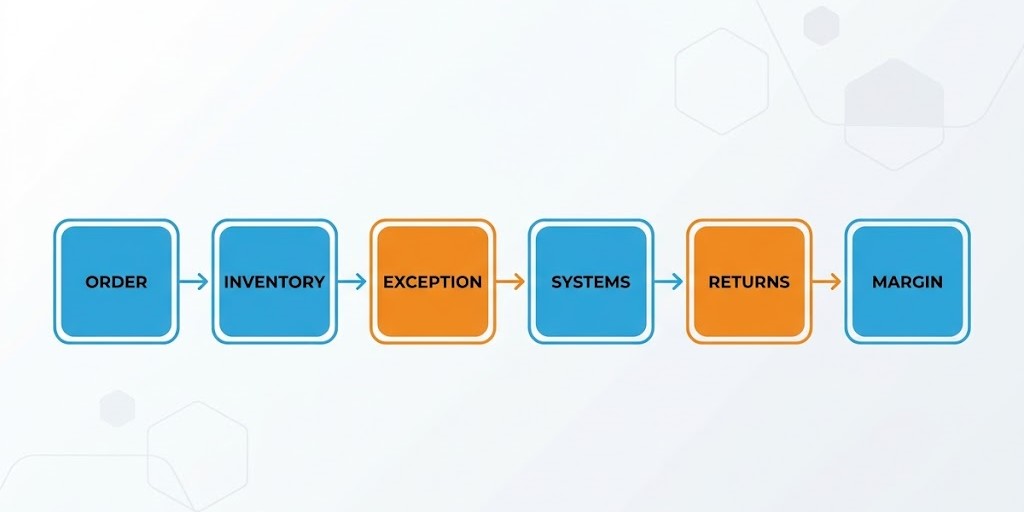
The Q4 Fulfilment Margin Checklist
Before peak, CFOs should be able to answer five questions:
- What percentage of orders requires manual intervention?
- Where are stock discrepancies most frequent?
- How quickly are exceptions resolved?
- Which handoffs still depend on spreadsheets or email?
- How long does returned stock take to become sellable?
These questions turn ecommerce fulfillment costs into measurable process-level costs.
Prioritise by Financial Impact
Not every inefficiency needs to be automated immediately. The strongest candidates are usually high-volume processes where manual work, errors or delays have a measurable financial impact. Warehouse automation ROI should be assessed in the same way. The business case should connect investment to measurable improvements in throughput, labour utilisation, accuracy, exception handling or processing cost, rather than assuming automation is valuable simply because the technology is available.
A process-level assessment, like the kind we.simplify uses when mapping workflows, can help identify where automation is likely to create the greatest operational capacity.
Protecting Q4 Margin Starts Before Peak
Peak season rarely creates operational weaknesses from nowhere. It exposes weaknesses already present. Temporary labour can add capacity, but it does not remove workflow friction. A stronger approach is to identify repetitive work, connect fragmented systems and automate predictable decisions before volume accelerates. For enterprises preparing for Q4, warehouse automation ROI matters alongside better integration and fewer handoffs. Automation should therefore be evaluated according to the constraint it removes, the capacity it creates and the measurable financial outcome it delivers. That is the difference between adding technology and improving the operating model.
At we.simplify, the focus is on connecting the workflow end to end so automation addresses the underlying process rather than simply digitising one isolated task. Reducing ecommerce fulfillment costs starts with the workflow itself. The objective is to create capacity without allowing cost and complexity to rise at the same rate.
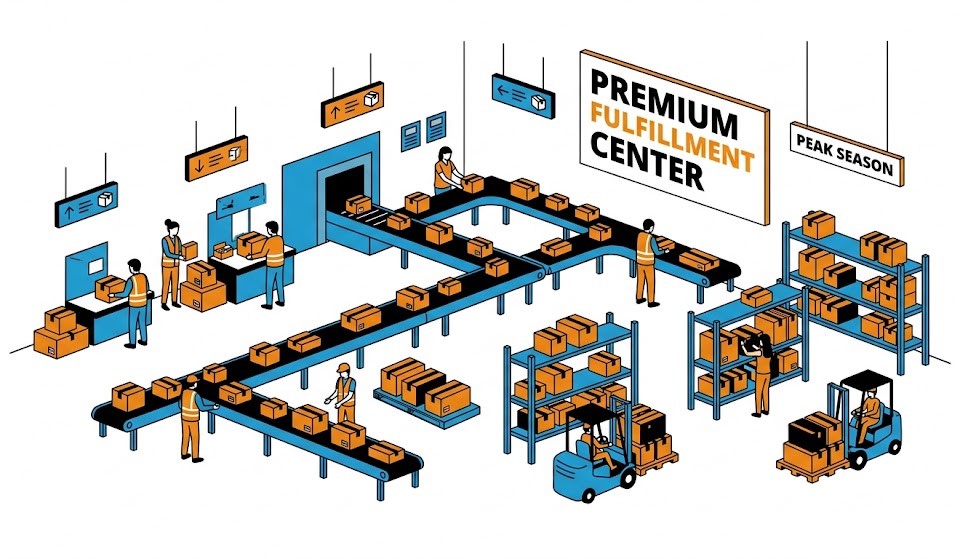
Protect the Margin Behind the Revenue
More orders do not automatically mean more profit. If every increase in sales brings more manual work, discrepancies, exceptions, reconciliation and delayed returns, revenue growth can come with diminishing margins. The businesses best positioned for Q4 will identify their biggest cost leaks before peak and address the workflows behind them.
At we.simplify, we help enterprises develop, integrate and automate the workflows that keep operations moving at scale. From identifying process bottlenecks to connecting disconnected systems and automating repetitive work, the goal is not simply to make existing processes faster.
Ready to identify where Q4 could put pressure on your margin? Join our upcoming live masterclass to identify the fulfillment bottlenecks that create hidden cost, understand which workflows can be improved before peak and prioritise the changes that can create the greatest operational impact.
Save your place for the masterclass and let’s win the Golden Quarter together.